
Organised into six sections — ‘Family’, ‘Writings’, ‘Portugal’, ‘Pilot Plan’, ‘Brasília’ and ‘Drawings’ — the exhibition traces a journey richly illustrated by the architect’s private life, whilst also offering new insights into his public and professional life. Among the highlights are the trips he made to Portugal between the 1940s and 1960s, partially documented in the well-known “Portugal Notebooks”.
At the heart of the exhibition are the original plans for the Pilot Plan of Brasília, rarely shown in Europe. Building on this core, Lucio Costa Arquivo proposes, according to the curator, a “confrontation with the contemporary”, inviting a reassessment of the architect’s legacy in light of current questions regarding his motivations, influences and the transformative impulse that marked the creation of Brazil’s new capital and modern architecture.
The ‘Lucio Costa Archive’ exhibition opened on 18 April at Casa da Arquitetura, with a programme that included two days of free activities and was accompanied by the launch of two publications: a volume of the same name, which offers an in-depth exploration of the collection through essays by Portuguese and Brazilian authors, and *Raízes do futuro: Lucio Costa e a tradição moderna* (Roots of the Future: Lucio Costa and the Modern Tradition) by Guilherme Wisnik, a revised and expanded edition of the work originally published in 2001.
‘Lucio Costa Archive’ forms part of the celebrations marking two hundred years of diplomatic relations between Portugal and Brazil.
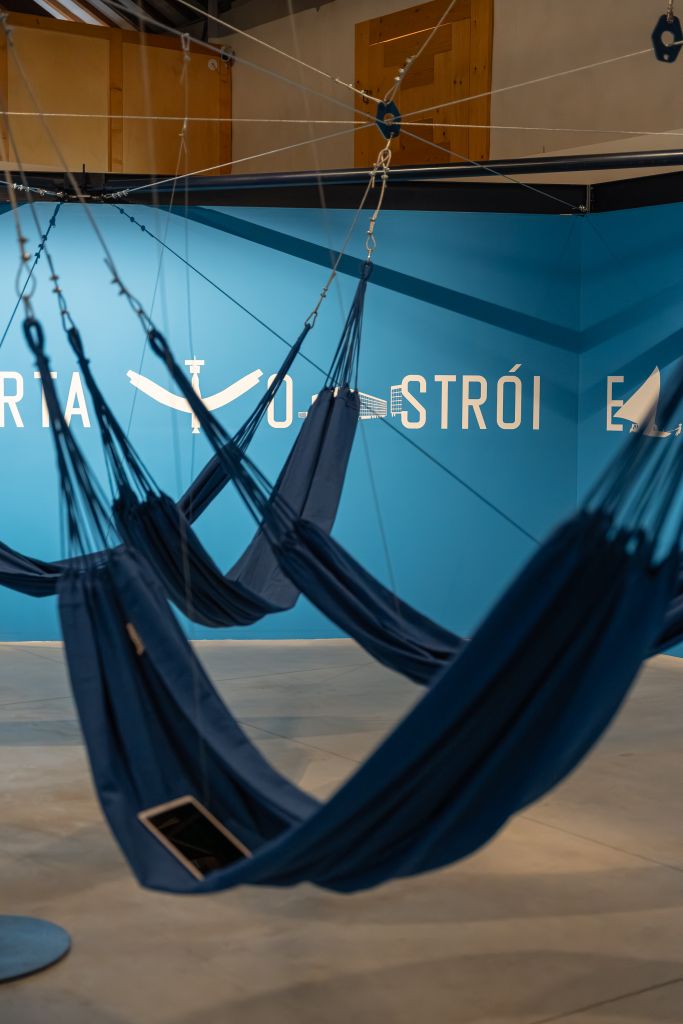
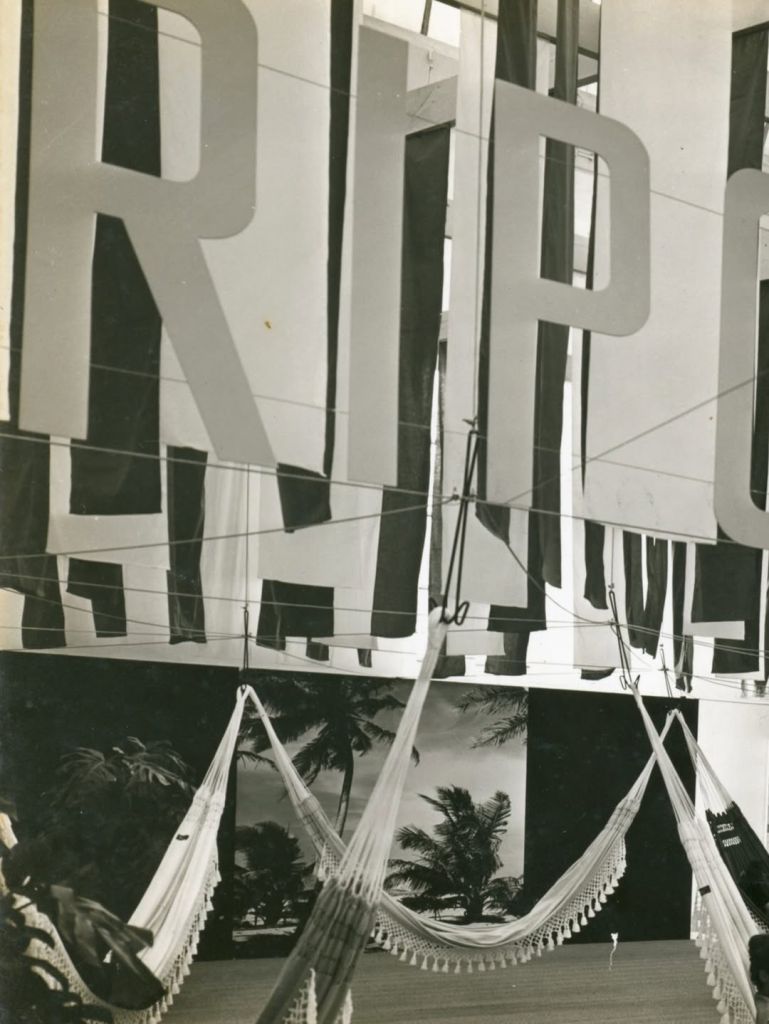
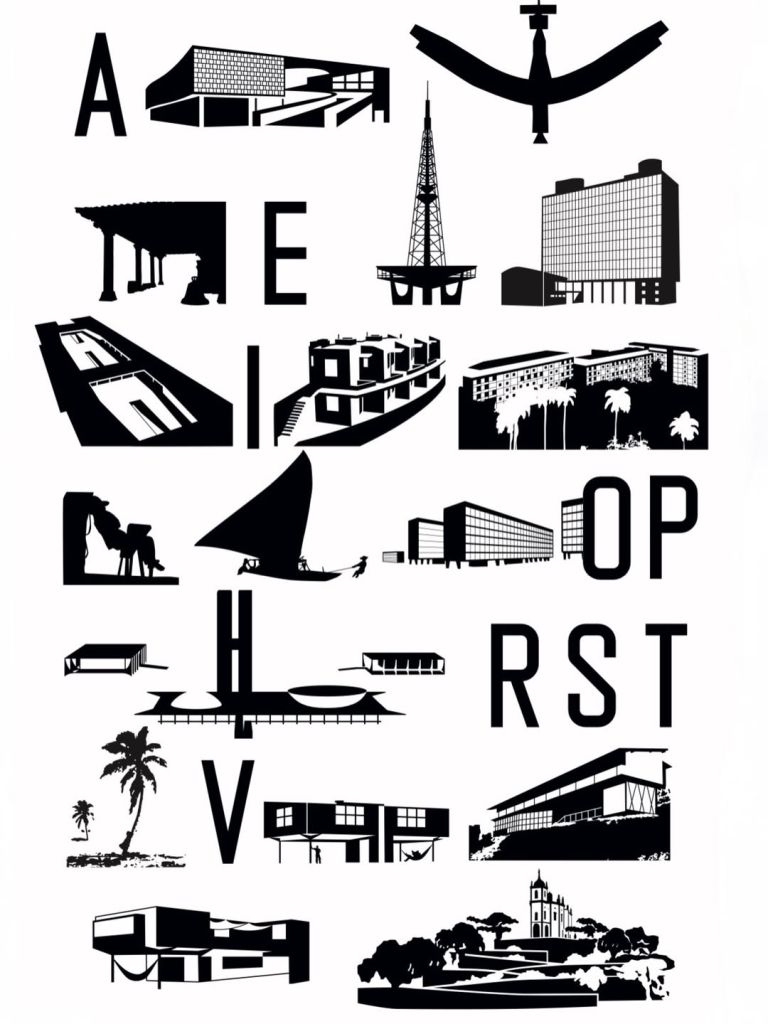
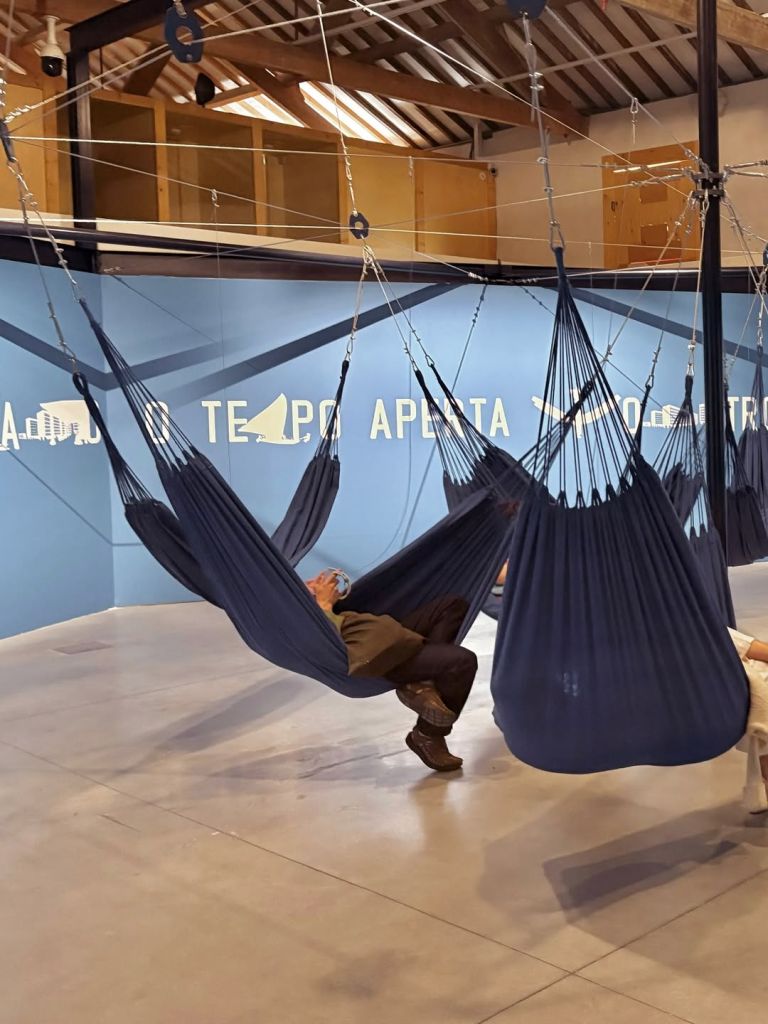
RIPOSATEVI is a typographic portrait of Lucio Costa, an alphabet formed by his projects and observations, from the documentation of the Pavilion of Brazil, at the XIII Triennial of Architecture in Milan, 1964.
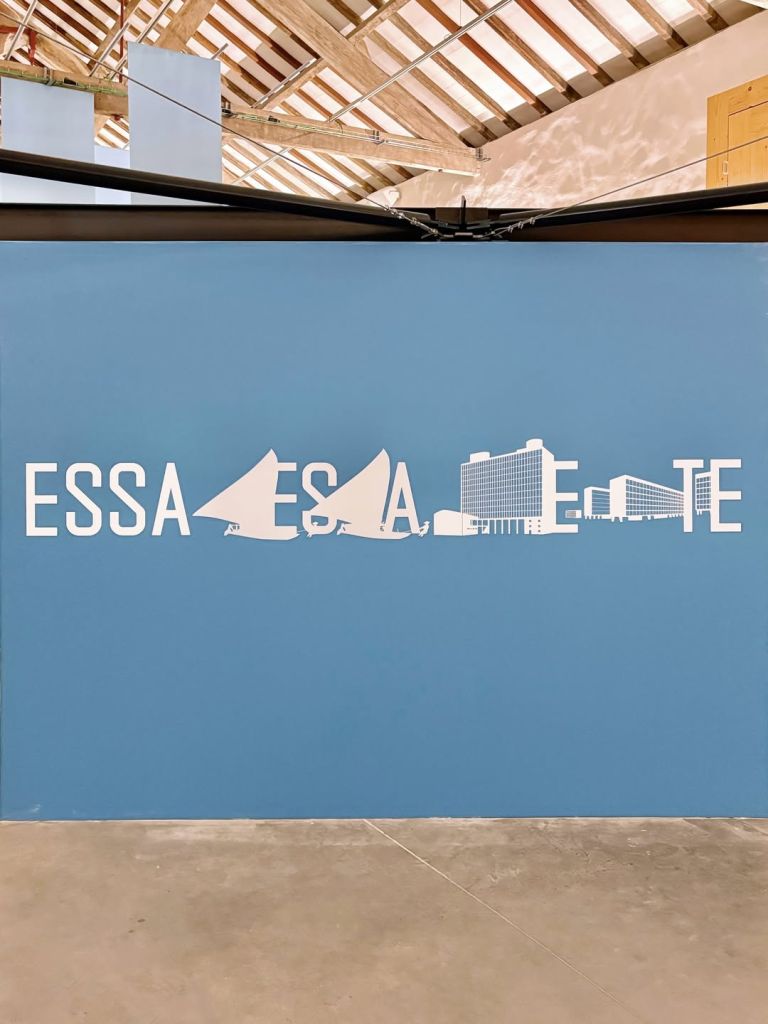
The image alphabet, applied to text, draws landscapes in which architectural designs and details coexist with elements of culture and nature. The buildings mix human figures, raisins and palm trees, chosen by Lucio Costa to integrate the pavilion, in photographs by Marcel Gautherot.
As letters, insert A E I O P R S T V, making anagrammatically appear, among the architectural silhouettes, the word RIPOSATEVI, sweet mot d’ordre chosen by the architect as the theme of his intervention in the triennial.
The installation in Povo Brasileiro Square materializes a phrase by Lucio Costa in an articulated horizon between language and architecture, in which words and projects are elements of construction and transformation.